Product Design
2025-26
AI
Herd.eco is a collaborative platform designed to help users search, understand, and act on blockchain data with the assistance of AI agents.

What is Herd?
Herd is an AI-assisted smart contract exploration platform that helps users search, understand, and work with onchain contracts in one shared workspace.
Crypto is built on composability, but most interfaces still make users explore it through fragmented tools, raw contract data, and technical block explorers. Herd turns that experience into a guided coterminal where users can move from search to context to action with the help of AI agents.
COMPLEX CONTRACT SYSTEMS
Smart contracts power deep interactions across protocols, but those relationships are difficult to understand through raw explorer data alone.
FRAGMENTED ONCHAIN CONTEXT
Users often jump between explorers, docs, dashboards, and social sources just to understand what a contract does.
AGENT-ASSISTED WORKFLOWS
Herd brings contract data, AI chat, visual context, and actions into one workspace so users can explore onchain systems more naturally.
Users had access to contract data, but had to work too hard to understand what it meant, how it connected, and what they could do next.
My Role
I worked on the product experience, UX flows, interface design, and visual system for the Herd coterminal. My focus was turning a complex contract exploration product into a clearer, more structured, and more usable interface.
A 01.
UX Flows
Mapped how users move from contract search to understanding, function exploration, transaction context, and AI-assisted actions.
A 02.
Interface Design
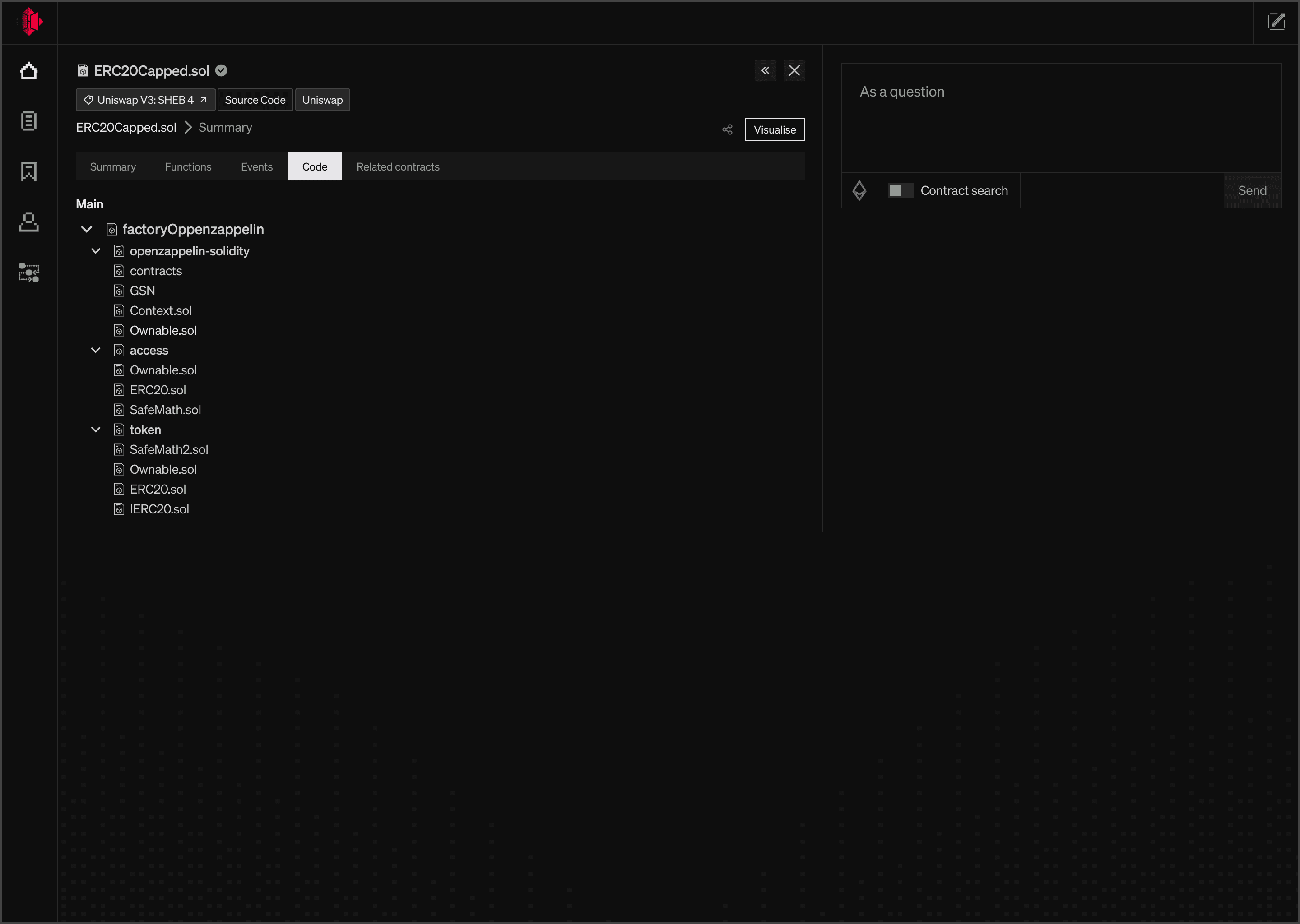
Designed core coterminal screens across chat, contract views, function details, visualizer, and transaction surfaces.
A 03.
Information Architecture
Structured complex contract data so users could understand what matters without being overwhelmed by technical depth.
A 04.
Design System
Created and maintained reusable components, states, and patterns to keep the product consistent across advanced workflows.
How do you make smart contract exploration feel less technical, more contextual, and easier to act on?
Smart contract exploration was powerful, but too fragmented to use confidently.
Users could access contract data, transactions, and protocol information, but understanding how everything connected took too much manual work.
The challenge was to design a workspace that helped users search, understand, and act on complex onchain interactions without removing the technical depth advanced users needed.

02 A.
Smart contract exploration was still too manual
Most users could look up a contract, address, or transaction, but understanding the actual meaning required too much effort. The product space was full of raw data, technical labels, scattered references, and disconnected tools.
The problem was not access to information. The problem was turning that information into context.
02 B.
Technical entry points
Contracts are usually explored through addresses, ABIs, functions, logs, and transactions. For many users, the starting point itself feels too technical.
02 C.
Fragmented context
Important information lives across block explorers, docs, dashboards, protocol websites, and community discussions. Users have to assemble the full picture themselves.
02 D.
Hidden relationships
Crypto is composable, but the connections between contracts, protocols, functions, and flows are rarely visible in the interface.
02 E.
Exploration and action are separated
Users can inspect data in one place, ask questions somewhere else, and take action through another tool. The workflow breaks at every step.
Users
Professionals trying to understand and act on onchain systems faster.
01
Developers
Need to inspect contracts, understand functions, and explore how different contracts interact.
02
Analysts
Care about contract behavior, protocol relationships, transaction patterns, and ecosystem-level insights.
03
Power users
Want to understand advanced onchain workflows without reading raw contract data or switching between multiple tools.
04
Teams
Need shared context for monitoring contracts, generating reports, and coordinating onchain activity.
Key UX Challenges
01
Discovery
Make smart contract exploration feel approachable without hiding the technical depth advanced users need.
02
Context
Keep contract data, AI explanations, functions, and transactions close together so users do not lose the thread.
03
Composability
Reveal relationships between contracts and protocols in a way that feels visual, understandable, and useful.
04
Action
Help users move from asking questions to generating insights, monitoring activity, or preparing actions inside one workflow.
Turning a technical product idea into a structured coterminal experience.
The goal was to make smart contract exploration more usable without reducing the power of the underlying system. I broke that down into user needs, product flows, interface patterns, and design decisions so each surface had a clear purpose.
Phase 1
Understanding user needs
Mapped where users struggle while exploring contracts: finding the right contract, understanding what it does, reading functions, tracing transactions, and connecting it to broader protocol behavior.
Phase 2
Structuring the workspace
Explored how chat, contract data, functions, transactions, and visual context could live together inside one coterminal instead of feeling like separate tools.
Phase 3
Designing core flows
Turned the product ideas into focused flows for contract search, contract detail, chat interaction, function exploration, transaction review, and visualizer screens.
Phase 4
Building reusable patterns
Created reusable components and interaction patterns for tables, cards, chat elements, function blocks, empty states, loading states, and visual surfaces.
From user need to design decision
Each user need translated into a specific interface decision so the product could feel guided instead of open-ended.
01
Know where to start
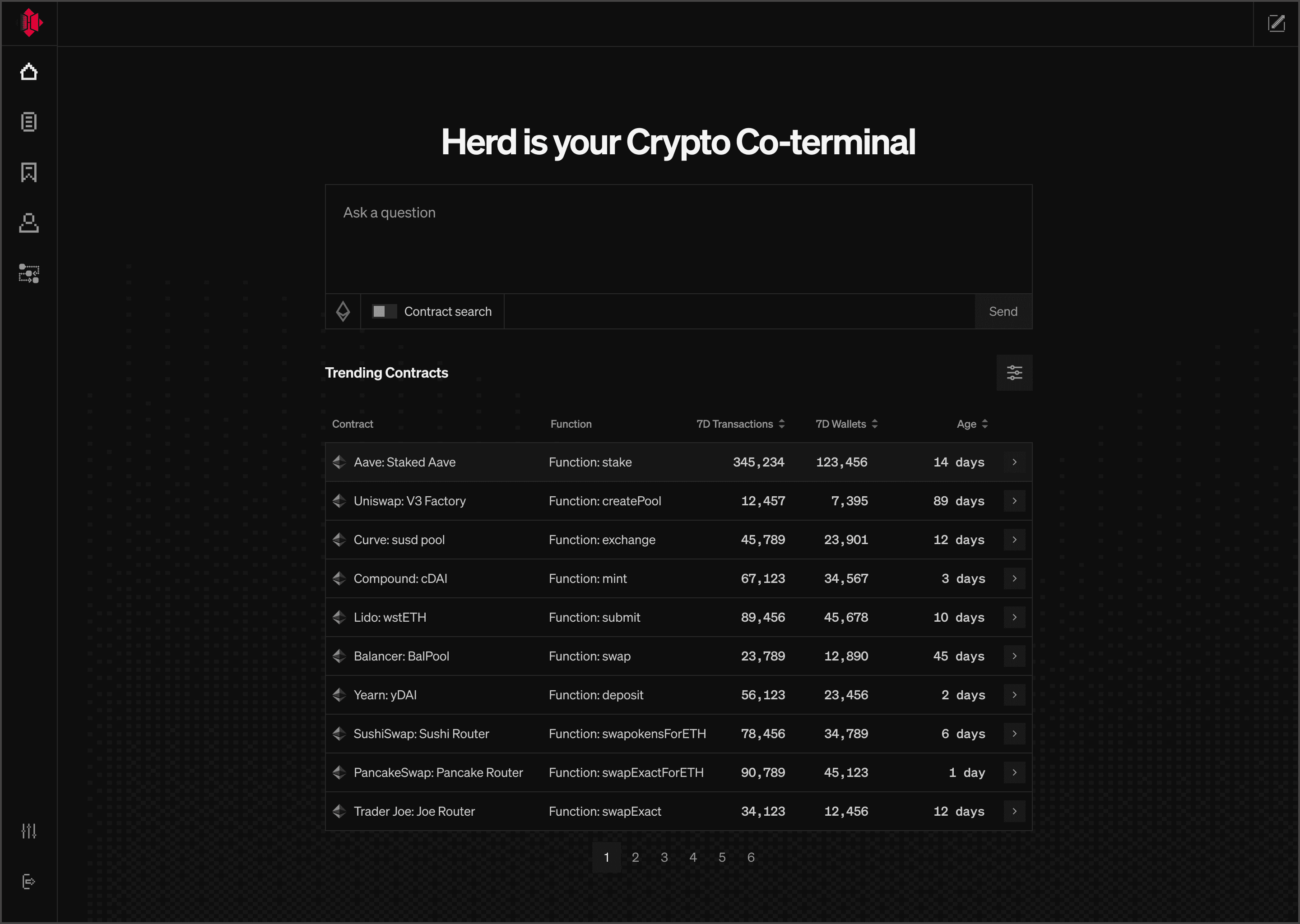
Added visible entry points around search, suggested contracts, common actions, and contextual prompts instead of relying only on blank chat.
02
Understand what a contract does
Placed summaries, contract details, functions, and AI explanations close together in the same workspace.
03
See how things connect
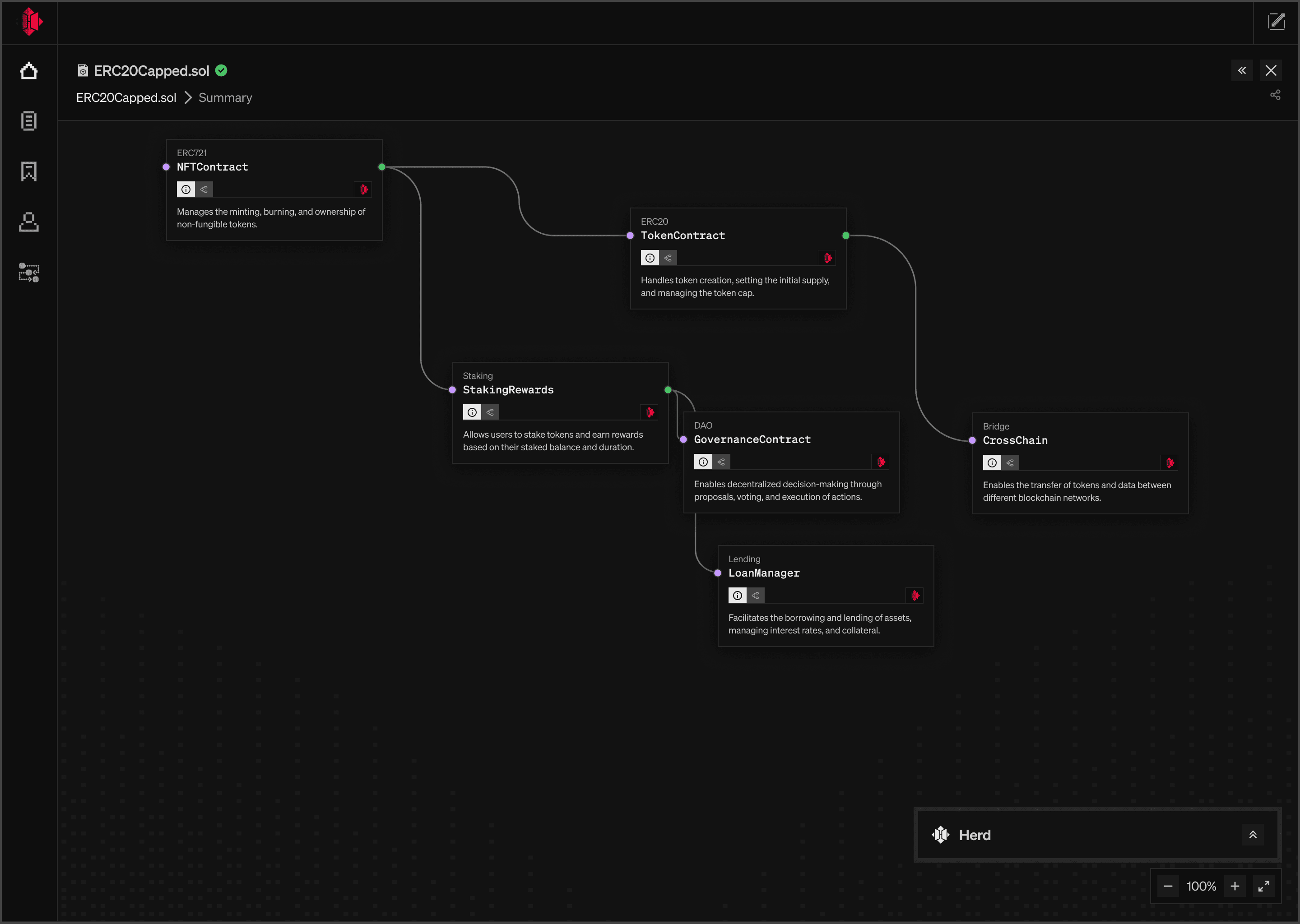
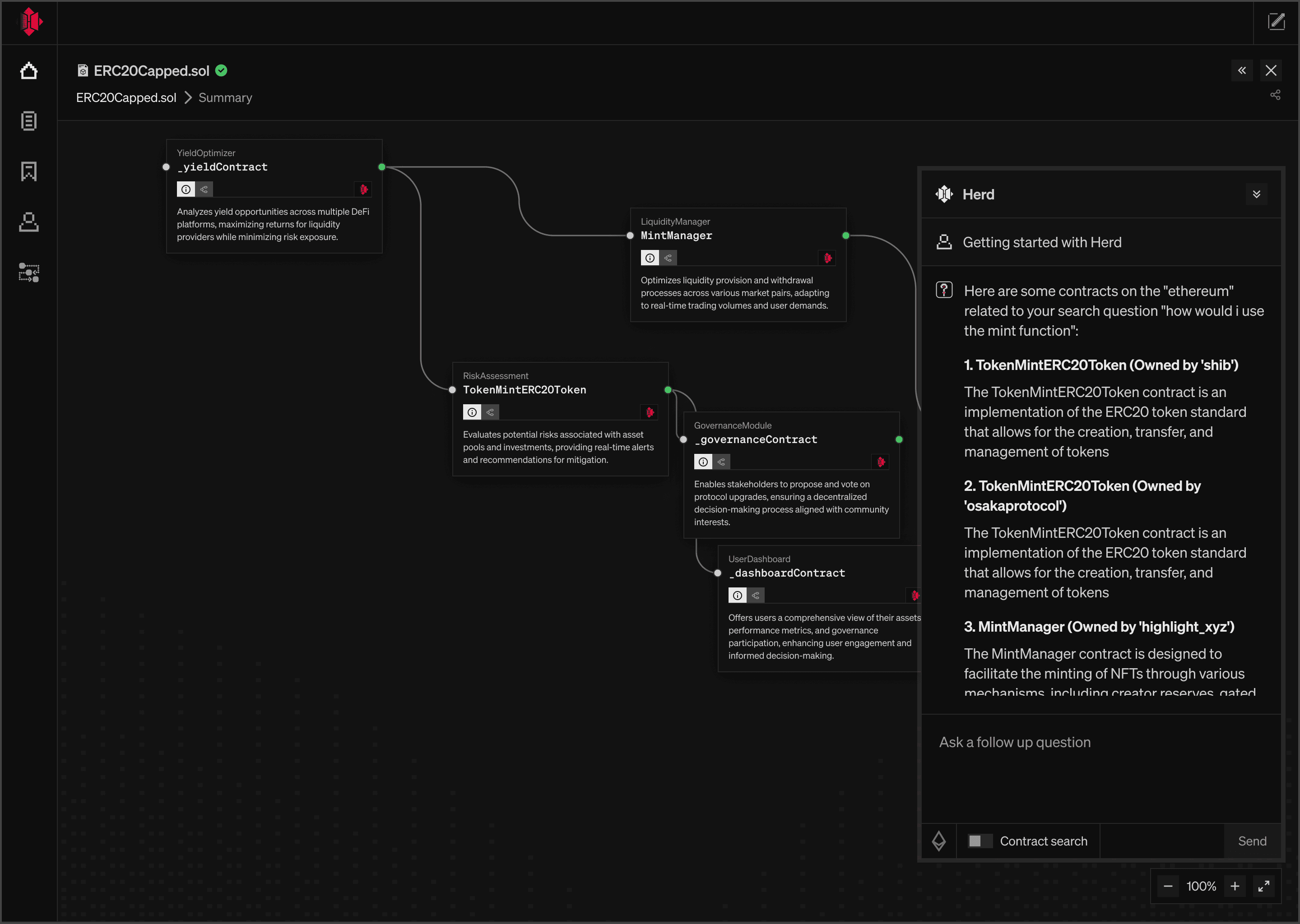
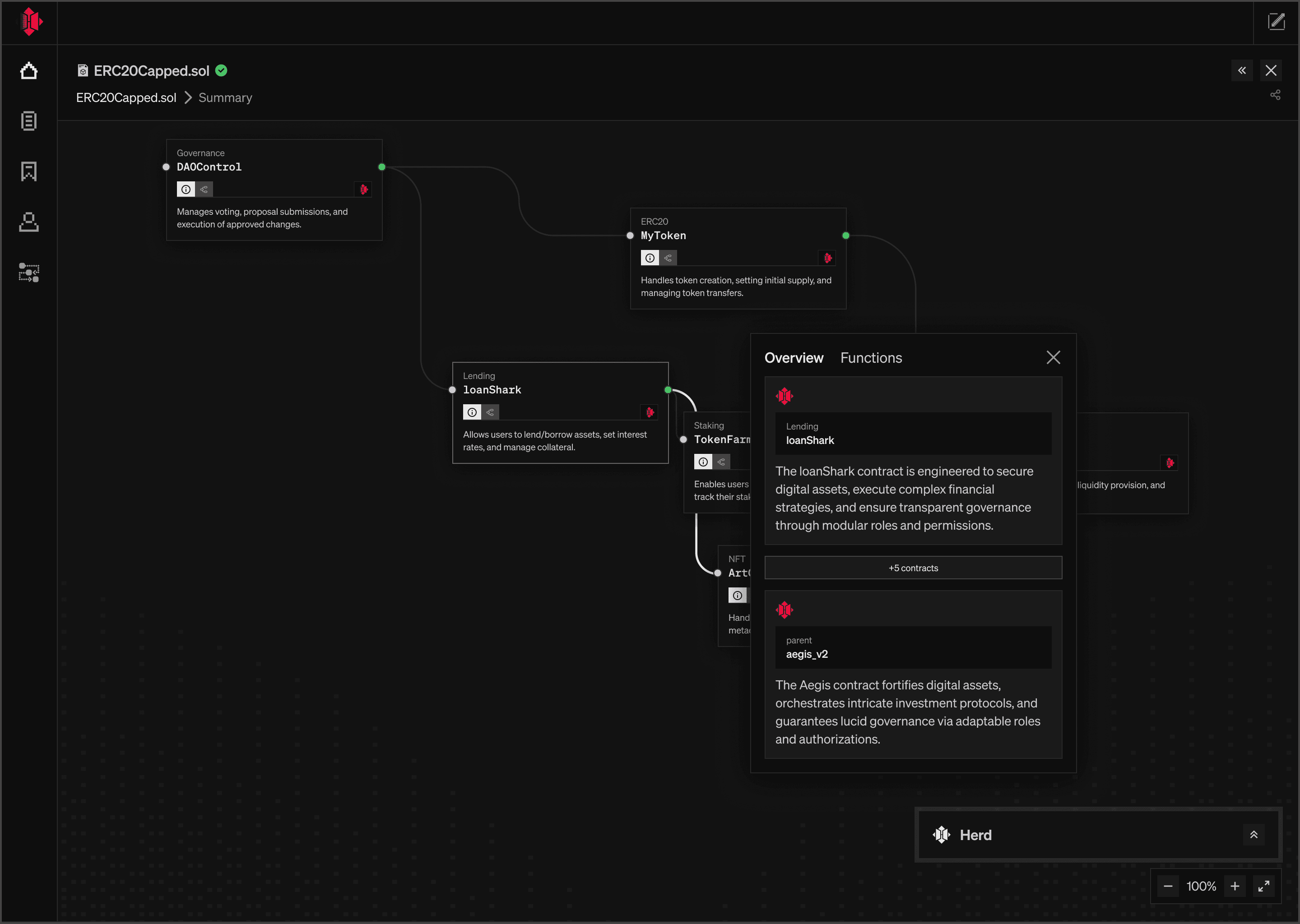
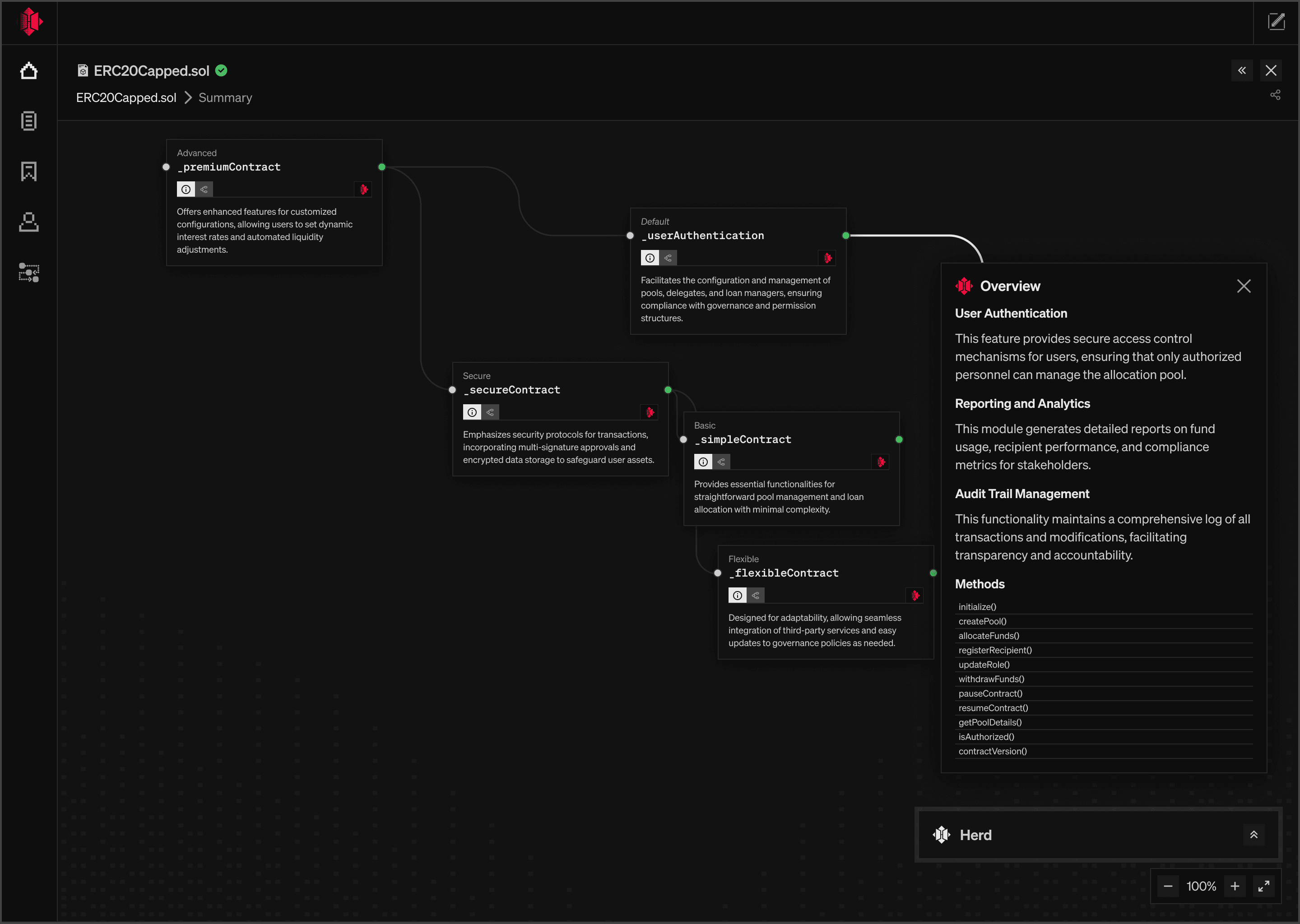
Introduced visualizer surfaces to make relationships between contracts, functions, and flows easier to understand.
04
Move from exploration to action
Designed the coterminal around continuous workflows: search, inspect, ask, compare, generate, monitor, and act.
From contract lookup to agent-assisted exploration.
Herd brings search, chat, contract data, visual context, and actions into one shared workspace. The solution was designed to help users move from “what is this contract?” to “what can I understand or do with it?”
04 A.
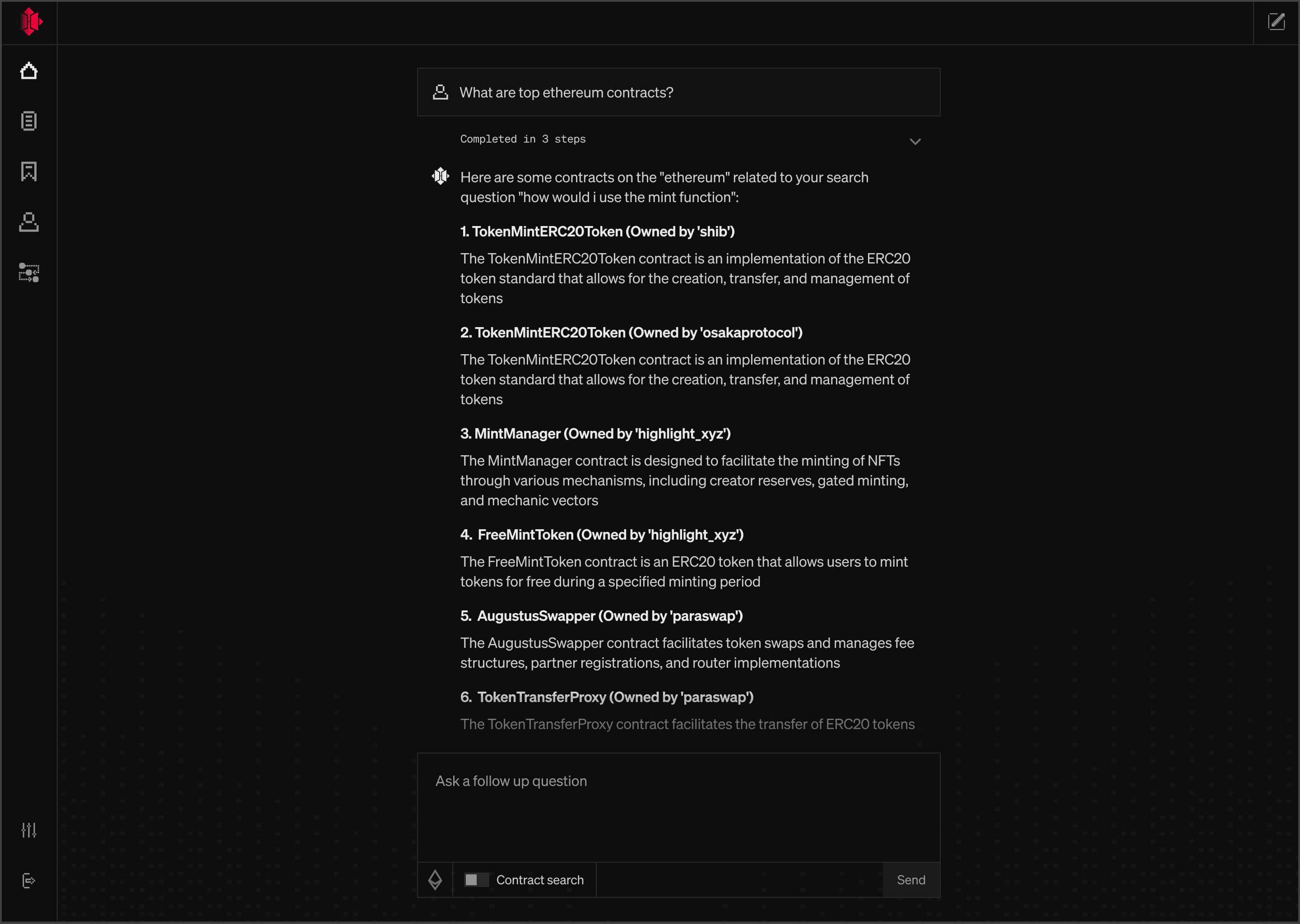
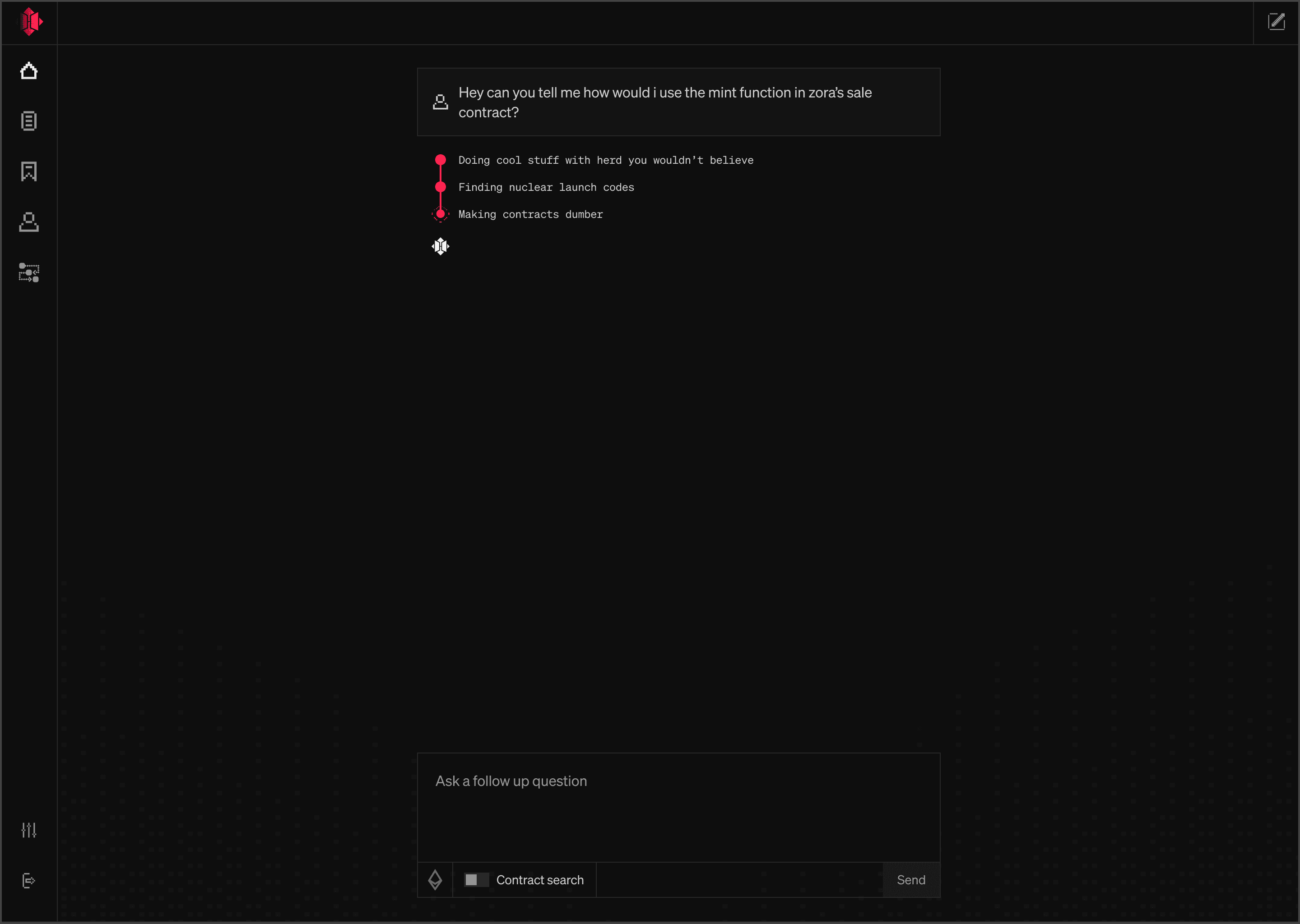
Natural language contract search
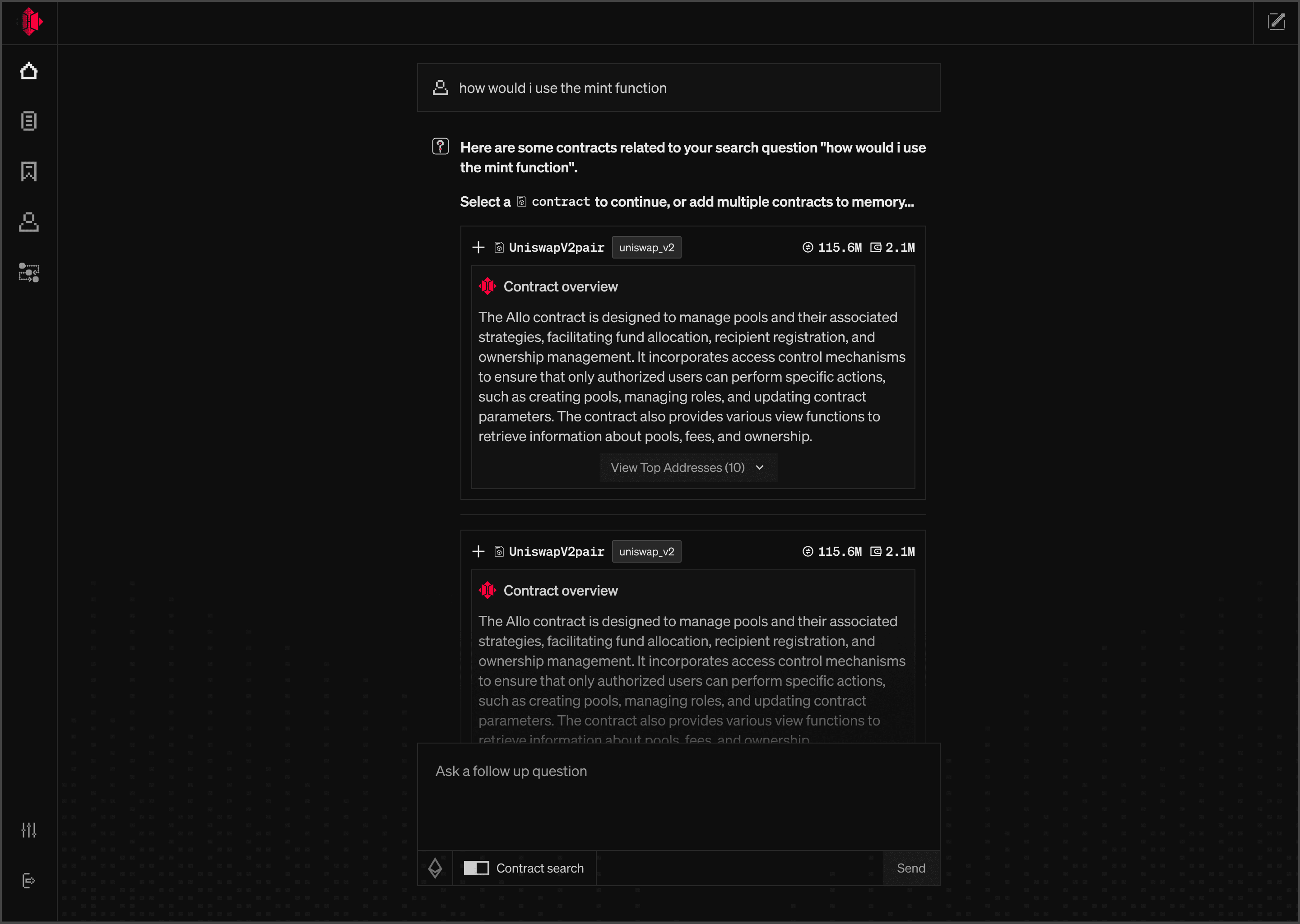
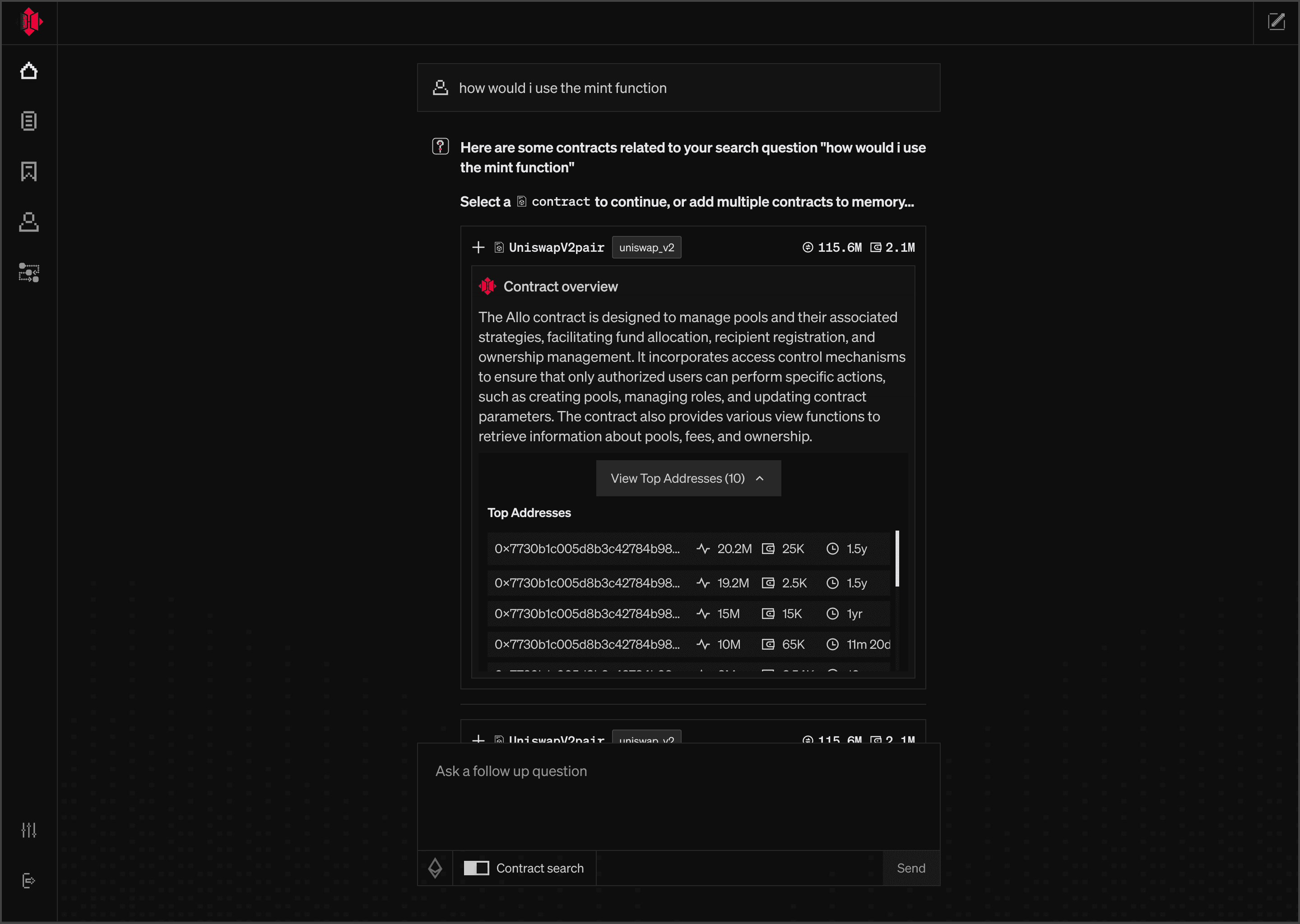
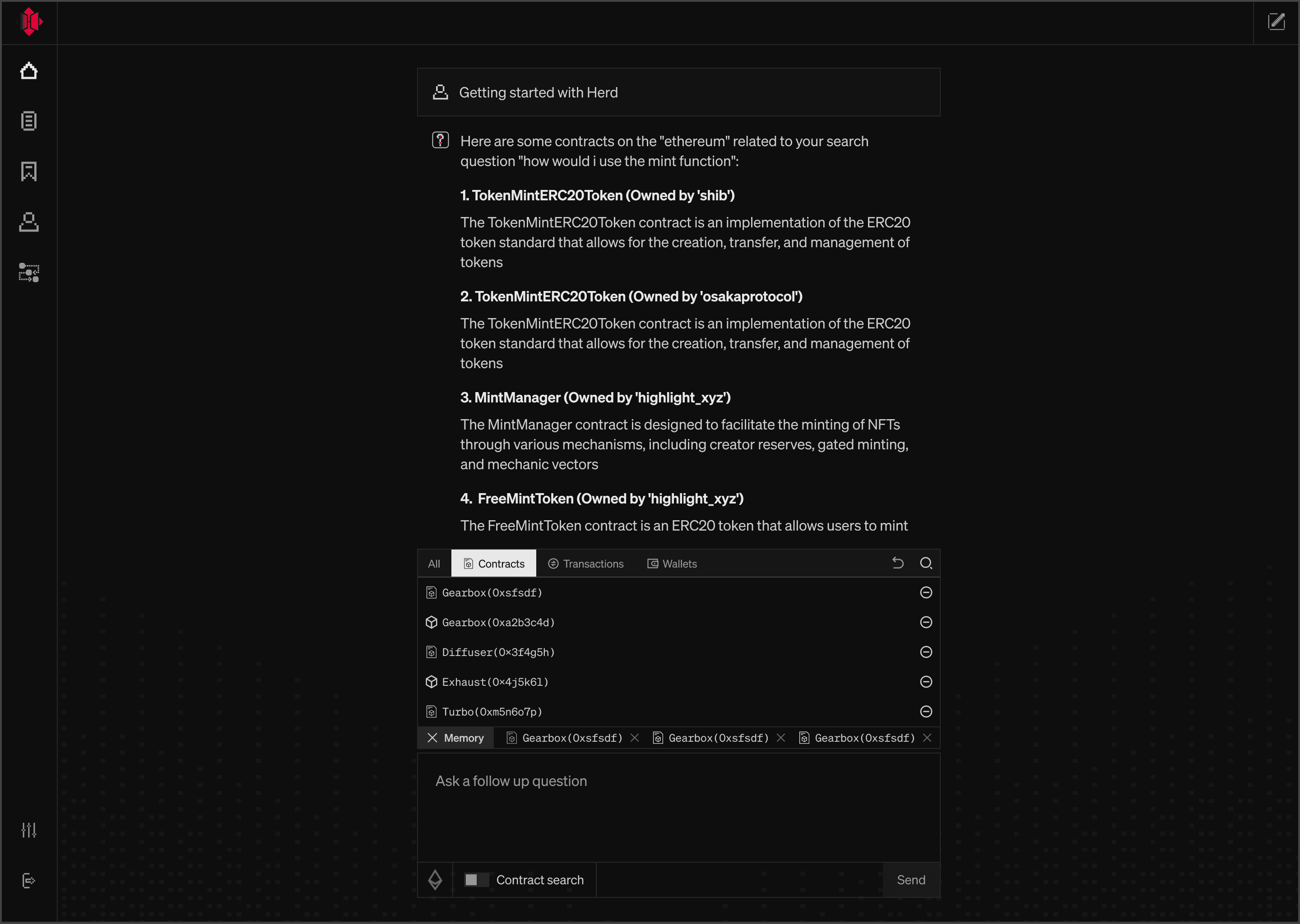
Users can search for contracts using plain language instead of only relying on addresses, ABIs, or manual lookup. This lowers the starting friction and makes contract discovery feel more approachable.
04 B.
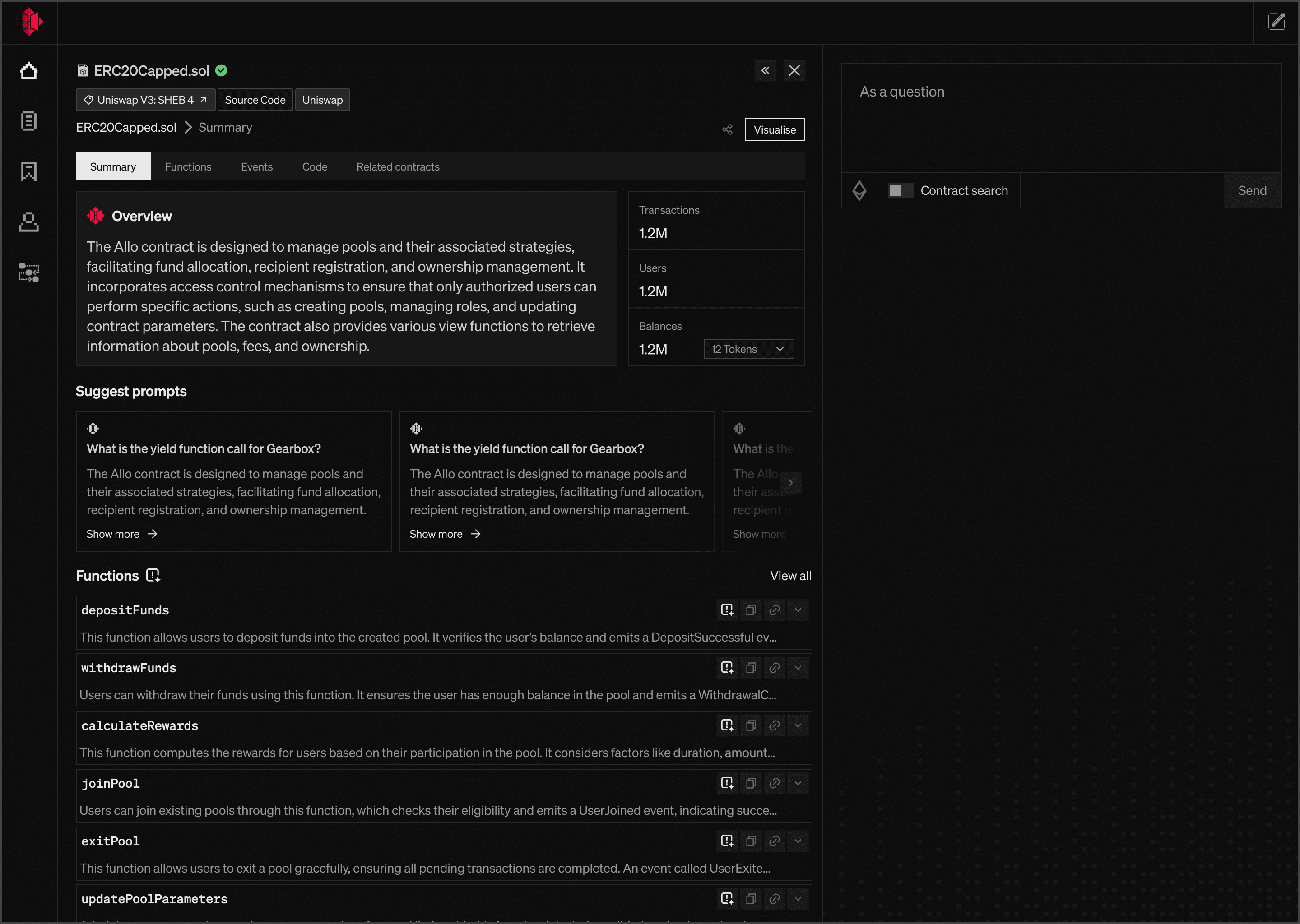
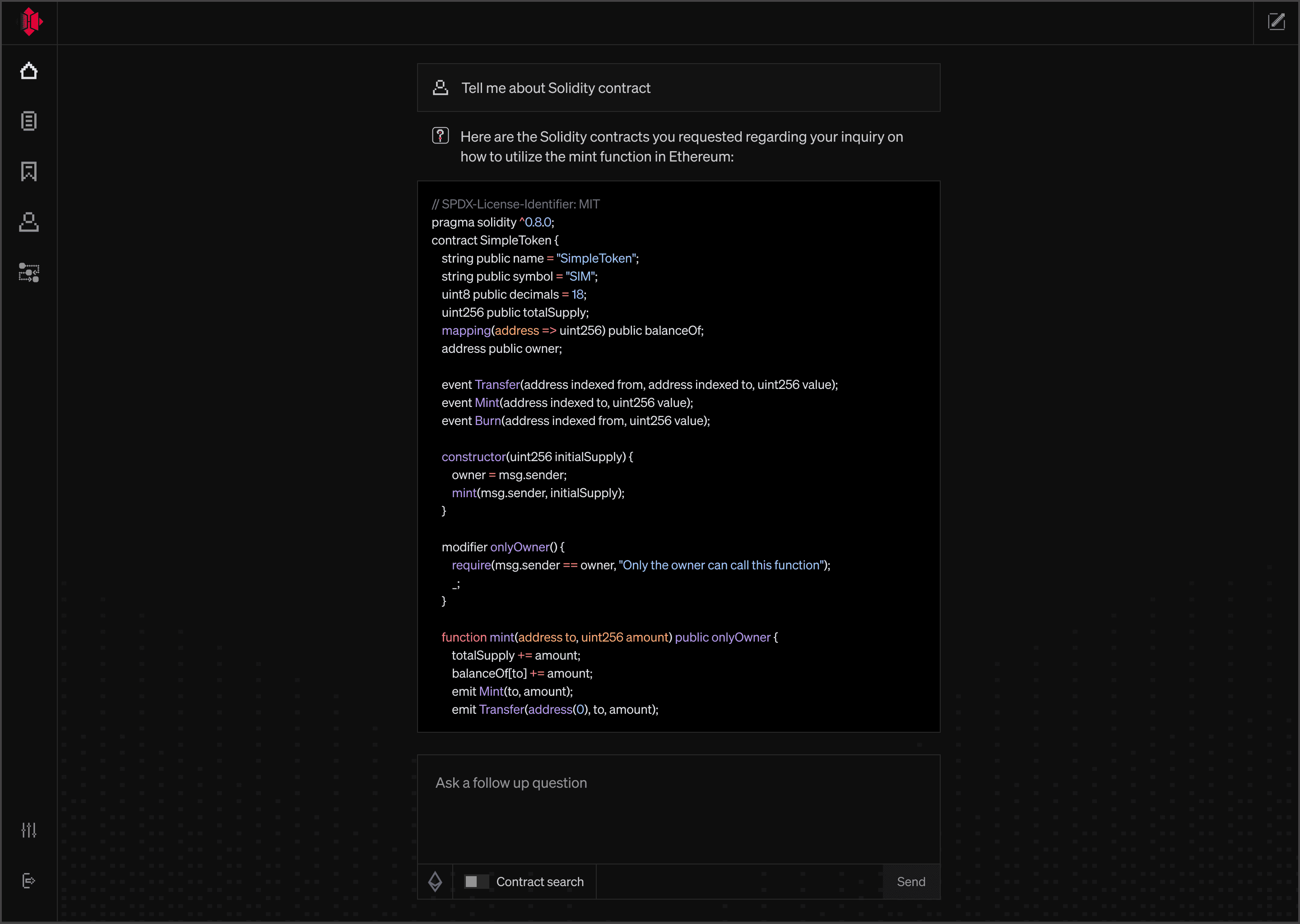
Contract + Chat workspace
The core coterminal combines AI chat with contract information, so users can ask questions while viewing the relevant contract context. This makes exploration feel continuous instead of fragmented across multiple tools.
04 C.
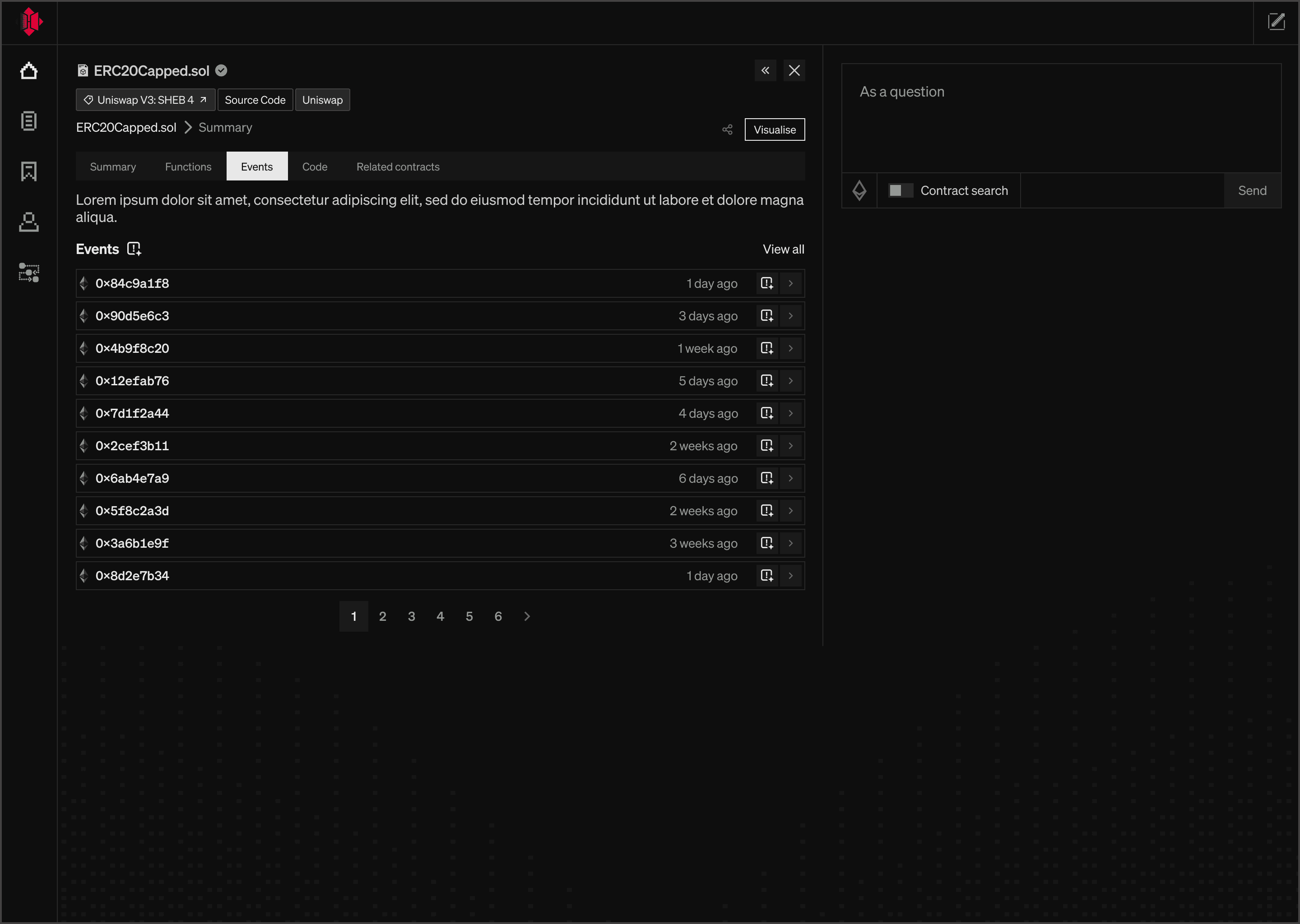
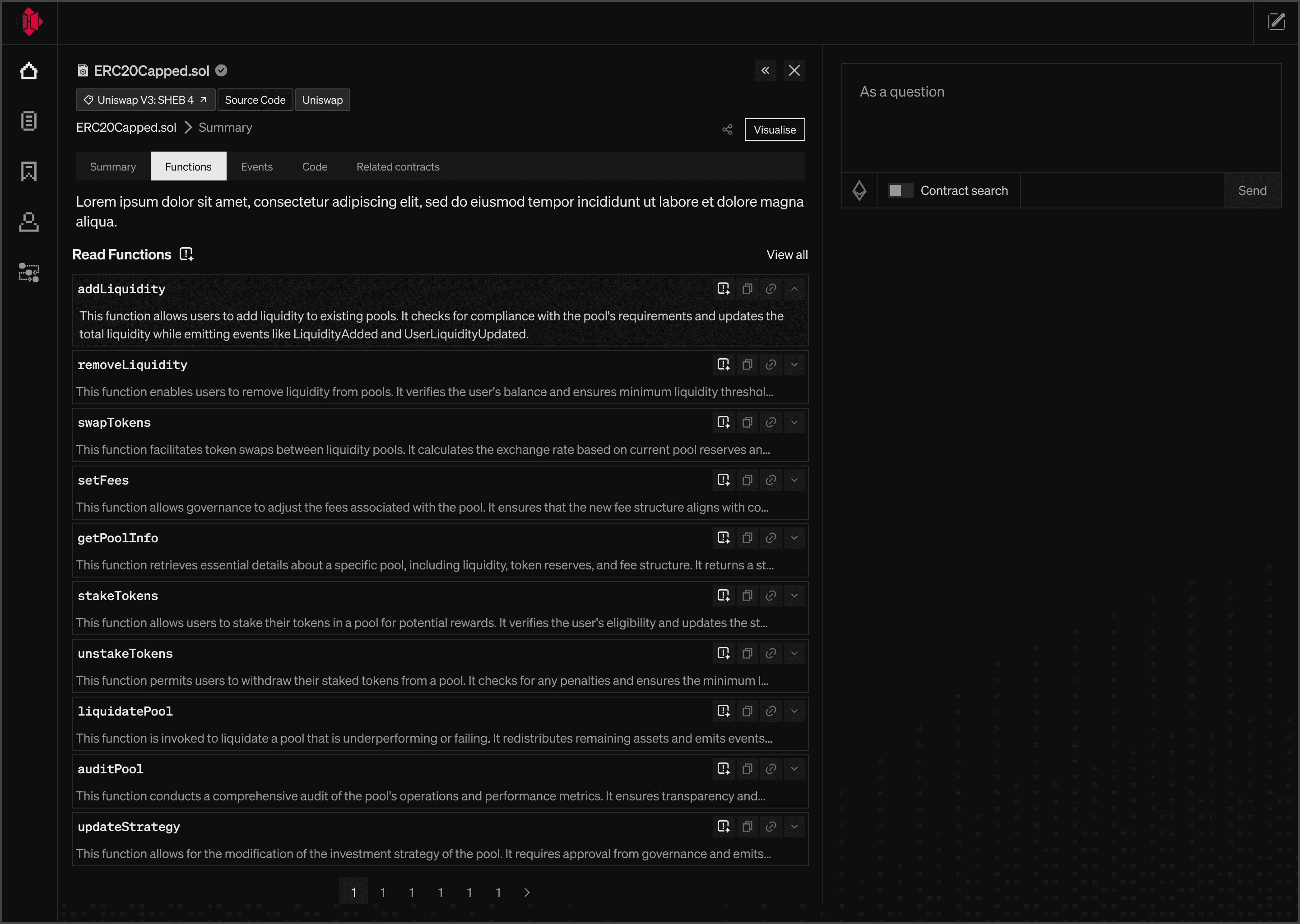
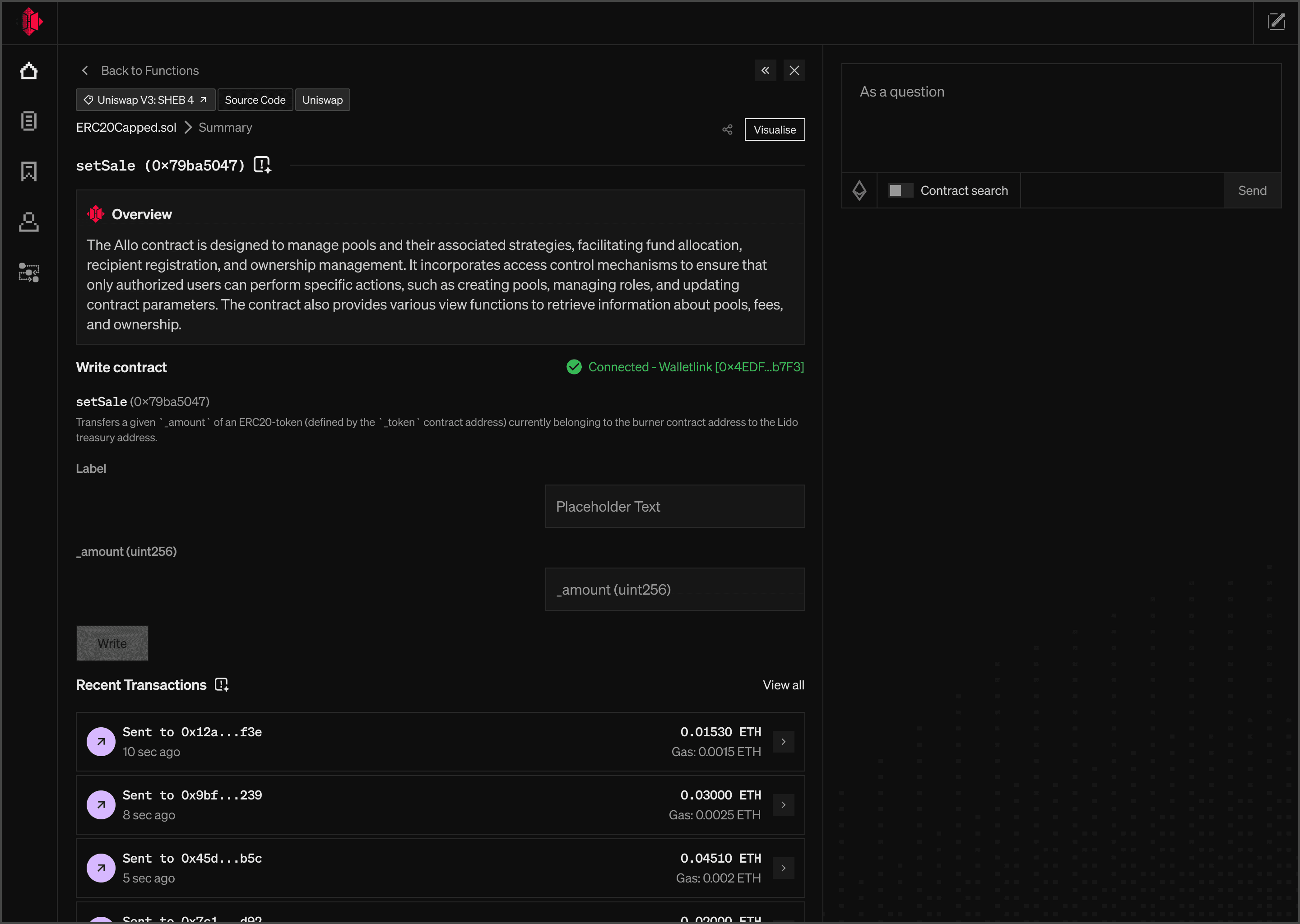
Function exploration
Users can inspect contract functions, understand what they do, and explore how they may be used in real workflows. This helps bridge the gap between raw contract data and meaningful interaction.
04 D.
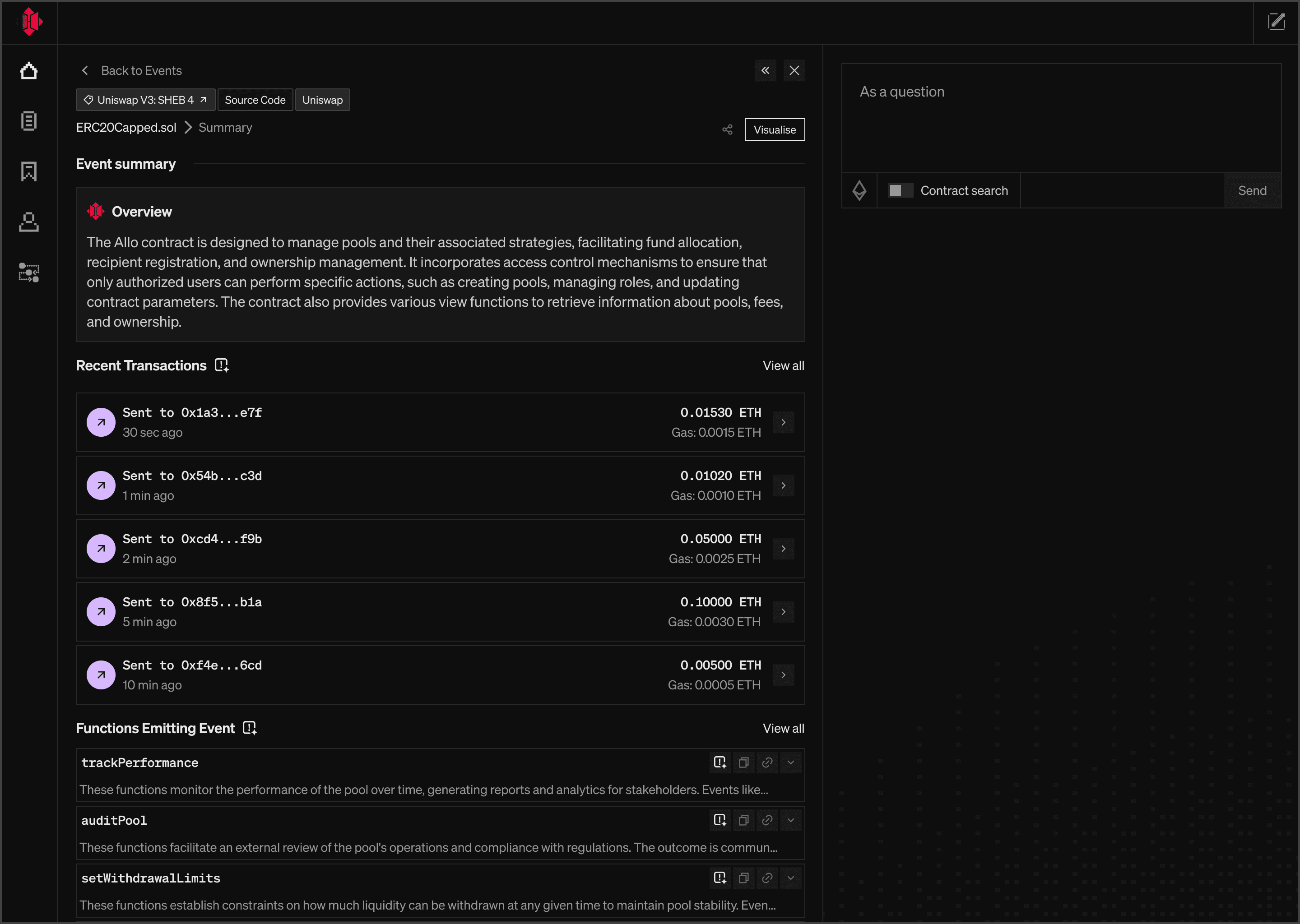
Transaction context
Transaction surfaces help users understand activity around a contract, including what happened, where it happened, and why it may matter. This gives users more confidence before moving deeper into analysis or action.
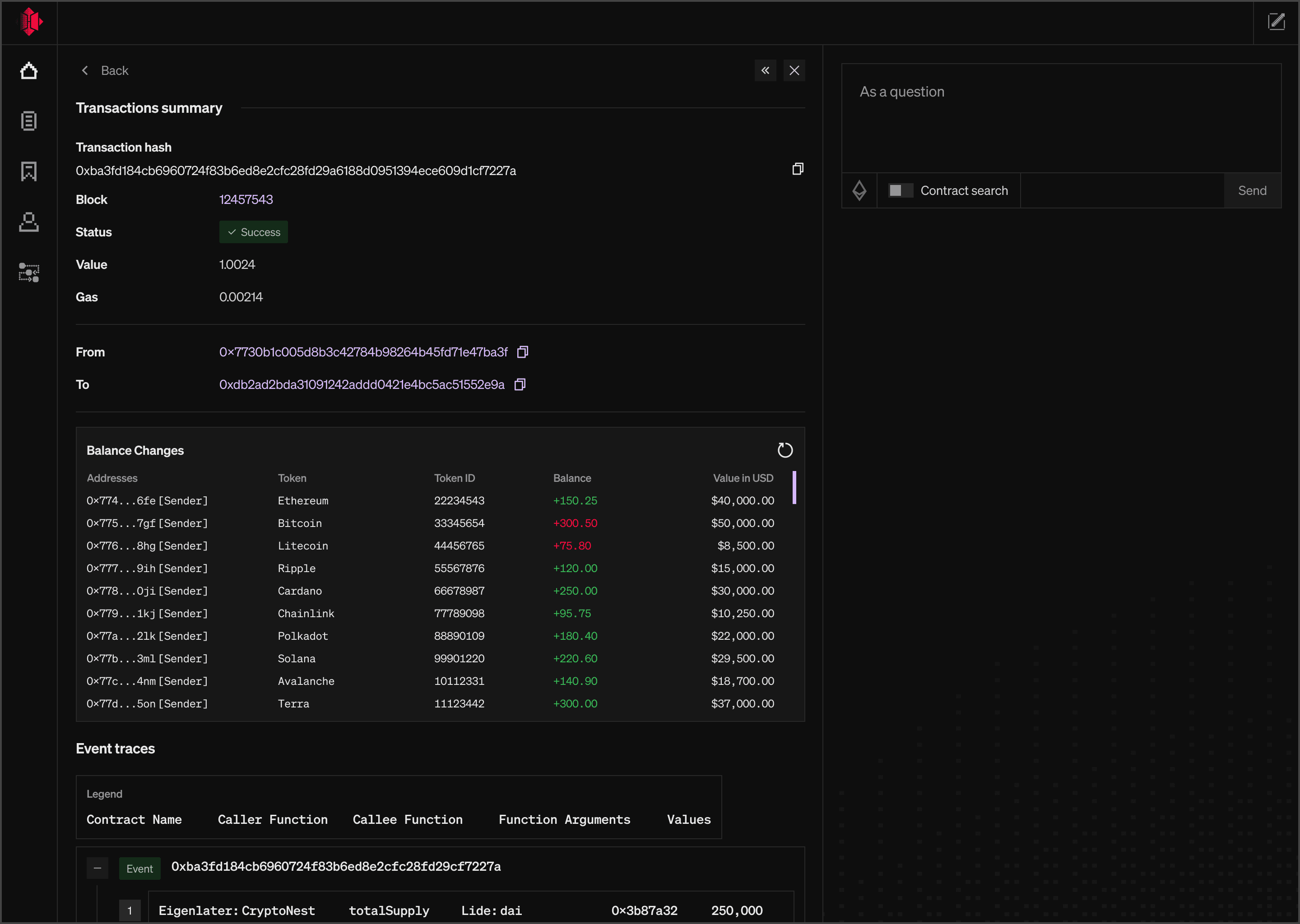
Turning a technical onchain workflow into a clearer product experience.
The project helped shape Herd into a more usable coterminal experience, where users could explore smart contracts with better context, clearer structure, and stronger guidance.
Clearer starting points
The interface gave users more visible ways to begin exploring, instead of relying only on an open-ended chat box.
Less fragmented exploration
Contract data, AI responses, functions, transactions, and visual context were brought closer together inside one workspace.
Stronger understanding of composability
Visualizer surfaces helped make relationships between contracts and workflows easier to understand.
Learnings
L.01
AI products still need strong UX structure
Chat is useful, but users still need hierarchy, context, prompts, and visible paths through the product.
L.02
Technical depth should be layered
Advanced users need access to detail, but the interface should not expose all complexity at once.
L.03
Context is the real product value
In contract exploration, data alone is not enough. The real value comes from helping users understand what the data means and what they can do next.
L.04
Visual systems matter more in complex products
A consistent design system makes technical workflows easier to scan, understand, and extend over time.
Final Designs
02
See also